A retrospective on the First KIŠIB Conference (22–24 July 2026, Munich)
Events
By Albert Dietz | 25 August 2026
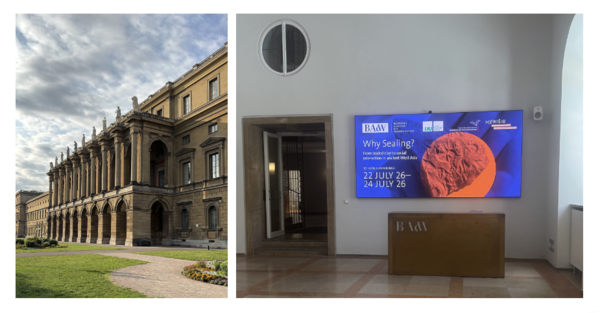
Our first conference has just come to an end, and we could not be happier with how it went. We were overwhelmed by the tremendous interest in the topic. Over three days at the Bavarian Academy of Sciences and Humanities (BAdW) in Munich, we had the opportunity to listen to and discuss talks and poster presentations by 38 researchers from eleven different countries.
More than 60 participants joined us in person to follow the presentations and discussions. Thanks to the technical support of the BAdW, we were also able to livestream the event and reach an even wider international audience: 110 online participants from 23 different countries registered for the conference. This remarkable level of participation, both in Munich and online, demonstrated the broad interest in the questions and themes at the heart of our conference.
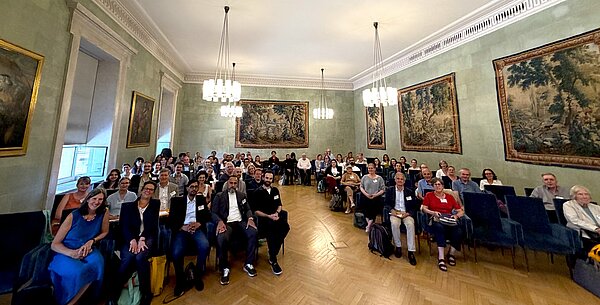
The First KIŠIB Conference brought together experts from archaeology and philology to explore the topic Why Sealing? From Sealed Clay to Social Interaction in Ancient West Asia. The conference examined sealing as a long-lasting communication strategy for expressing ownership, social relationships, trust, authority, and hierarchy. The contributions covered most of ancient West Asia, from Mesopotamia, Syria, the Levant, and Egypt to Anatolia and Iran, spanning a period of more than 3,000 years. Through interdisciplinary discussions, the conference approached sealed artefacts from multiple perspectives, connecting their materiality and spatial contexts with the people, institutions, practices, images, and inscriptions associated with them. By combining archaeological and philological approaches with digital methods of documentation and analysis, the conference contributed to a more integrated understanding of the people, social networks, norms, and actions behind ancient sealing practices.
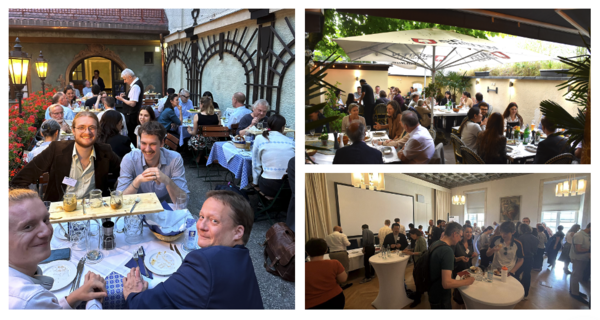
Apart from offering fascinating insights into current research on seals and sealings, the conference provided a great opportunity to connect with researchers and fellow seal(ing) enthusiasts. It became clear that there is an active and engaged international community in this field, and we hope that KIŠIB can serve as a hub connecting the people and projects working on seals and sealings.
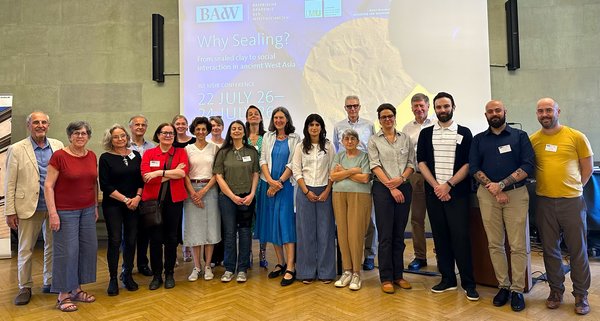
We thank the speakers and poster presenters for their many excellent and diverse approaches to the topic, as well as the chairs and the audience, whose contributions greatly enriched the lively discussions. Beyond these academic contributions, the conference would not have been possible without the support of many people behind the scenes, including colleagues and staff from the Institute of Near Eastern Archaeology at LMU Munich, the Bavarian Academy of Sciences and Humanities, and the KIŠIB project. We would especially like to thank our student assistants Louis, Annika, Emily, Vincent, Marius, and Fabian for their invaluable support.
We are already looking forward to future events and to keeping this momentum going. We also look forward to publishing the proceedings of the First KIŠIB Conference in due course and sharing its contributions with the wider research community.




© 2018-2026