Stamped & Rolled
The Use of Stamp-Cylinder Seals through the Ages (PhD thesis)
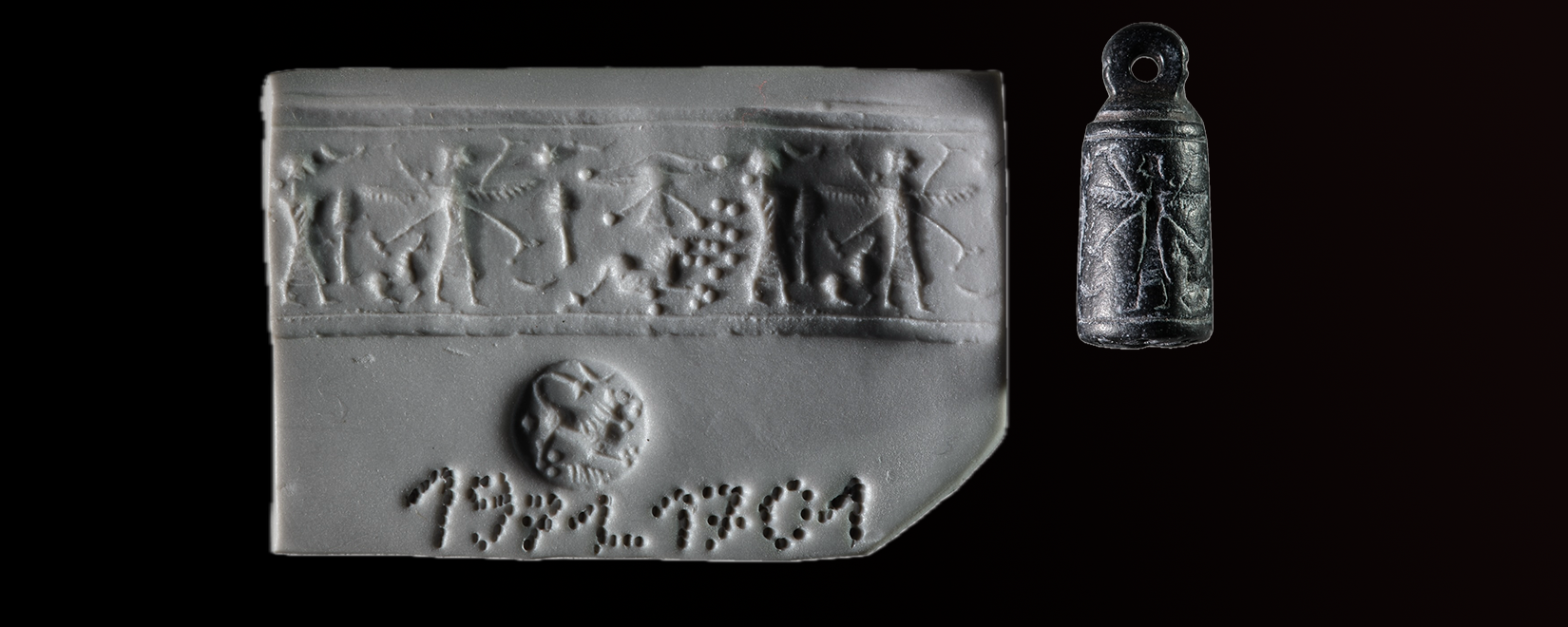
In the study of Near Eastern sealing practices, a certain developmental sequence is often assumed: beginning with the use of stamp seals, gradually shifting towards the use of cylinder seals, and eventually returning to stamp seals. This model excludes those regions in which stamp seals remained in use throughout the ages. Alongside these two types of seals, however, a third form can be identified: objects that combine a stamp seal and a cylinder seal in a single artefact. These stamp-cylinder seals, together with their associated sealings, can be traced from contexts of the 3rd millennium BCE through to the end of the Neo-Assyrian period. Most known examples originate from modern-day Iraq, Syria, and Turkey, with further examples known from as far afield as Iran, Egypt, and the Aegean. Although stamp-cylinder seals have been mentioned in numerous scholarly works, a detailed examination of this specific seal type has so far been lacking.
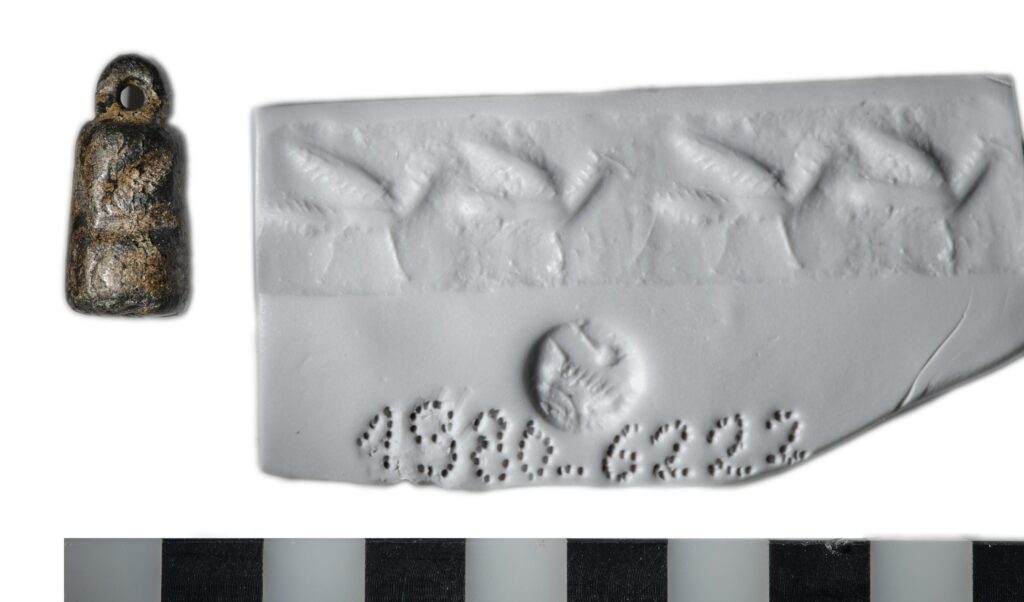
The analysis of stamp-cylinder seals first raises questions about their regional and chronological distribution. Further questions concern possible overlaps with other seal types, especially with regard to iconography and the raw materials used. Differences between the use of the stamping surface and the cylinder-seal surface also need to be taken into consideration. Taken together, these lines of enquiry can help us better understand who used these seals, in which contexts, and for what purposes.
Collaboration with the KIŠIB project offers an excellent opportunity to access a wide range of material, including both published examples and artefacts preserved in smaller collections. This significantly broadens the available corpus and provides a strong basis for further research.
This PhD thesis aims to highlight this distinctive type of seal, which has so far remained at the margins of research on seals and sealings.
Eva Stöckert (Archäologische Staatssammlung München)

Eva Stöckert studied Archaeology: Europe and the Near East at Ludwig-Maximilians-Universität München, where she completed her Bachelor’s degree. During her Master’s studies, she specialised in Near Eastern Archaeology and wrote her Master’s thesis on “The Life of Women in Neo-Assyrian Palaces”. As an undergraduate student, she took part in several excavation projects in Azerbaijan and Iraq.
From 2017 to 2019, Eva Stöckert was a member of the DFG Emmy Noether project “Flight – Migration – Interaction. Artefact-related Diversity in Ancient Near Eastern Contexts of the 3rd and 2nd Millennium BC”. She subsequently worked on the project “Sasanian Trade Networks and the Silk Road” at the Department of Christian Archaeology at Friedrich-Alexander-Universität Erlangen-Nürnberg. Since 2023, she has been a permanent member of the Archaeological State Collection Munich, working in the Department of Depots and Registration.
In early 2025, a cooperation between the KIŠIB project and the Archaeological State Collection Munich was initiated by Dr. Albert Dietz and Eva Stöckert. This cooperation provided the starting point for her current PhD thesis on stamp-cylinder seals, with examples preserved in the depot of the Archaeological State Collection Munich serving as core research material. The PhD project started at Ludwig-Maximilians-Universität München in 2026 under the supervision of Prof. Dr Adelheid Otto.