KIŠIB corpus
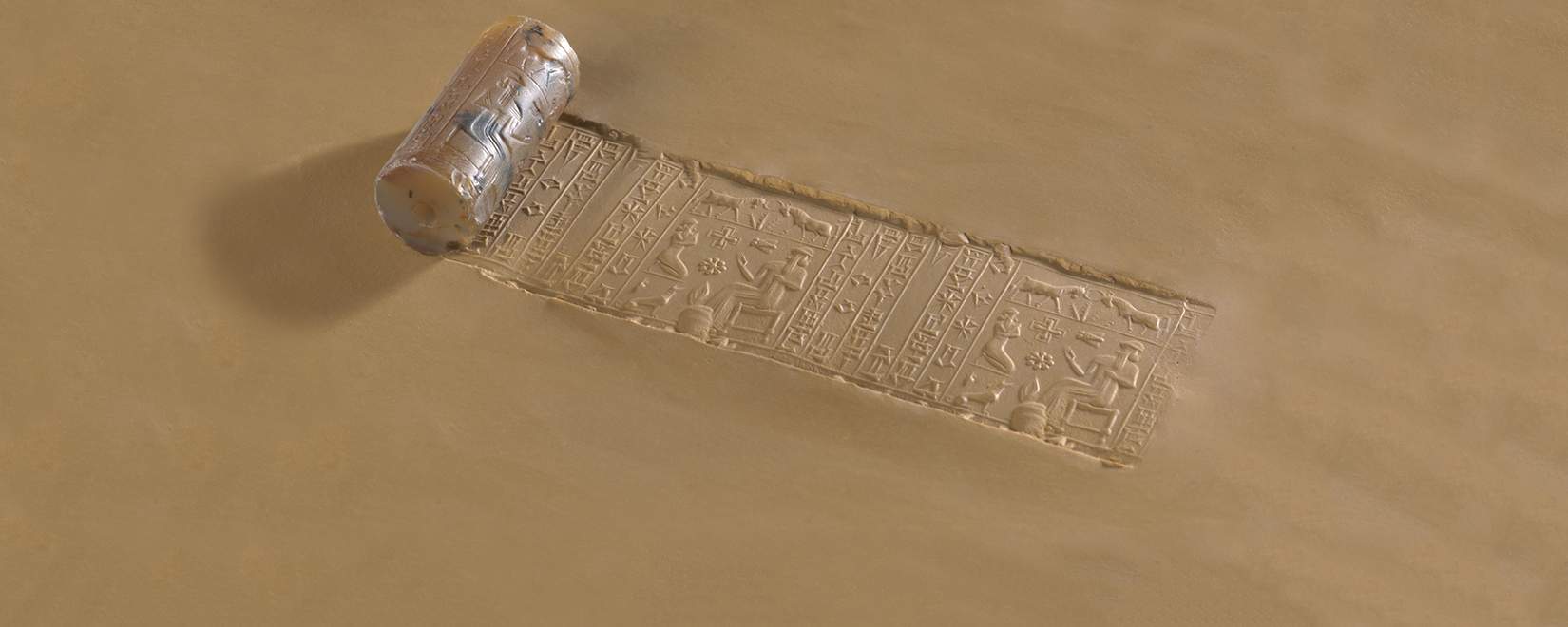
The KIŠIB corpus is the central resource of the project: a growing digital collection of ancient West Asian seals and sealings that brings together objects, images, and metadata from multiple sources. It is both an archive and a research tool structured to ensure long-term preservation, enriched through semantic connections, and openly accessible to diverse audiences. Today, ancient West Asian seals and their impressions are stored in numerous museums, public and private collections, and institutions worldwide. This dispersal poses a challenge to achieving a comprehensive understanding of the people and societies who made and used them. KIŠIB addresses this fragmentation by systematically aggregating images and data on approximately 80,000–84,000 seals and sealed artefacts, dating from the fourth to the first millennium BCE.
Scope and boundaries
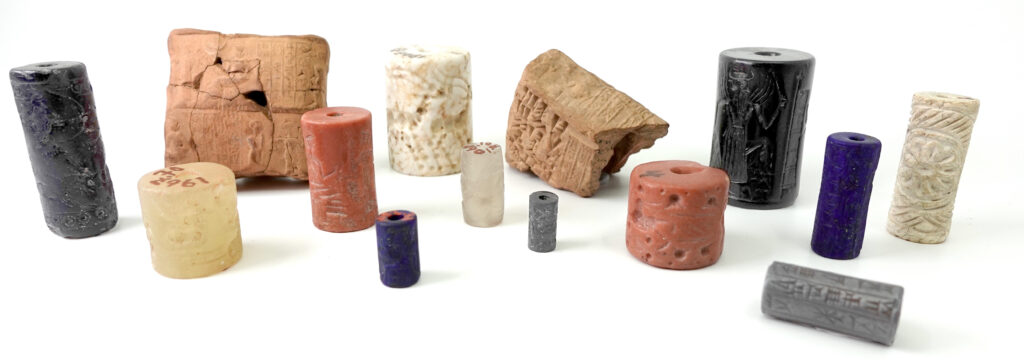
The dataset will include records of both physical seals—such as small stone cylinders or stamp seals—and seal impressions in clay. Archaeologically excavated objects form the core of the KIŠIB corpus. In addition, the corpus will include several thousand seals and sealed artefacts whose provenance cannot be reliably verified, as they were acquired on the antiquities market before 1970 and thus prior to the UNESCO Convention on the Means of Prohibiting and Preventing the Illicit Import, Export and Transfer of Ownership of Cultural Property.
Geographically, the corpus spans present-day Iraq, Syria, Turkey, Lebanon, Cyprus, Iran, and the Arabian Peninsula. Chronologically, it begins with the advent of cylinder seals in the Late Chalcolithic period (c. 3500 BCE) and ends with the decline of cuneiform writing and cylinder seal use in the late first millennium BCE, covering a period of more than 3,000 years. The focus lies on cylinder seals; however, stamp seals from the periods and regions mentioned above, which are often used alongside cylinder seals, will also be included. Stamp seals from the southern Levant (i.e. present-day Israel, the Palestinian territories, and Jordan), as well as from the Aegean and Egypt, will not be included.
Building the corpus
KIŠIB aggregates data on artefact-related properties (such as material, size, and manufacture) and discovery contexts of seals and sealed artefacts from publications, as well as from collaborating curatorial institutions and research projects. Subsequently, the visual and textual components of these artefacts are segmented and annotated using controlled vocabularies (for more details, see Digital infrastructure).
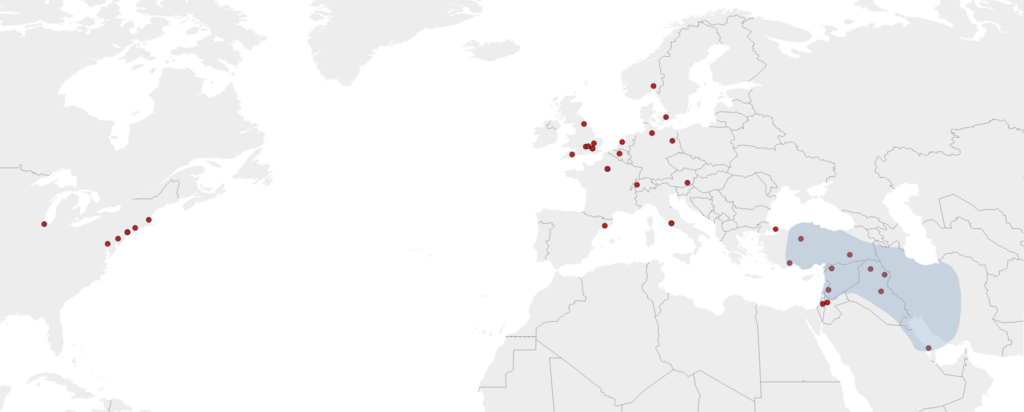
Of the estimated 150,000 known seals and sealed artefacts, more than half are currently held in European and North American collections, many of which remain insufficiently published. Numerous small collections—including more than 36 in Germany alone—also house relevant, often unpublished material. In recent years, museums and institutions have increasingly made their collections available online, providing valuable access to images and metadata. In parallel, text-centred digital platforms have made large cuneiform corpora accessible, including artefacts such as inscribed seals and sealed tablets.
KIŠIB does not aim to duplicate these efforts, but rather to integrate and interlink these rich yet heterogeneous datasets. While published records form the backbone of the KIŠIB corpus, the project also seeks to incorporate lesser-known and less accessible data from excavations, collections, and dedicated research initiatives into a comprehensive body of knowledge on seals. In doing so, KIŠIB connects past and ongoing analogue and digital efforts to relate artefacts, collections, and people. This work is carried out in close collaboration with scholars and institutions and with careful respect for political, legal, academic, and post-colonial rights and sensitivities.
Do you want to help expand the KIŠIB corpus on seals and sealed artefacts? Feel free to contact us directly or to contribute!