From seal to impression: Unrolling a pictorial treasure

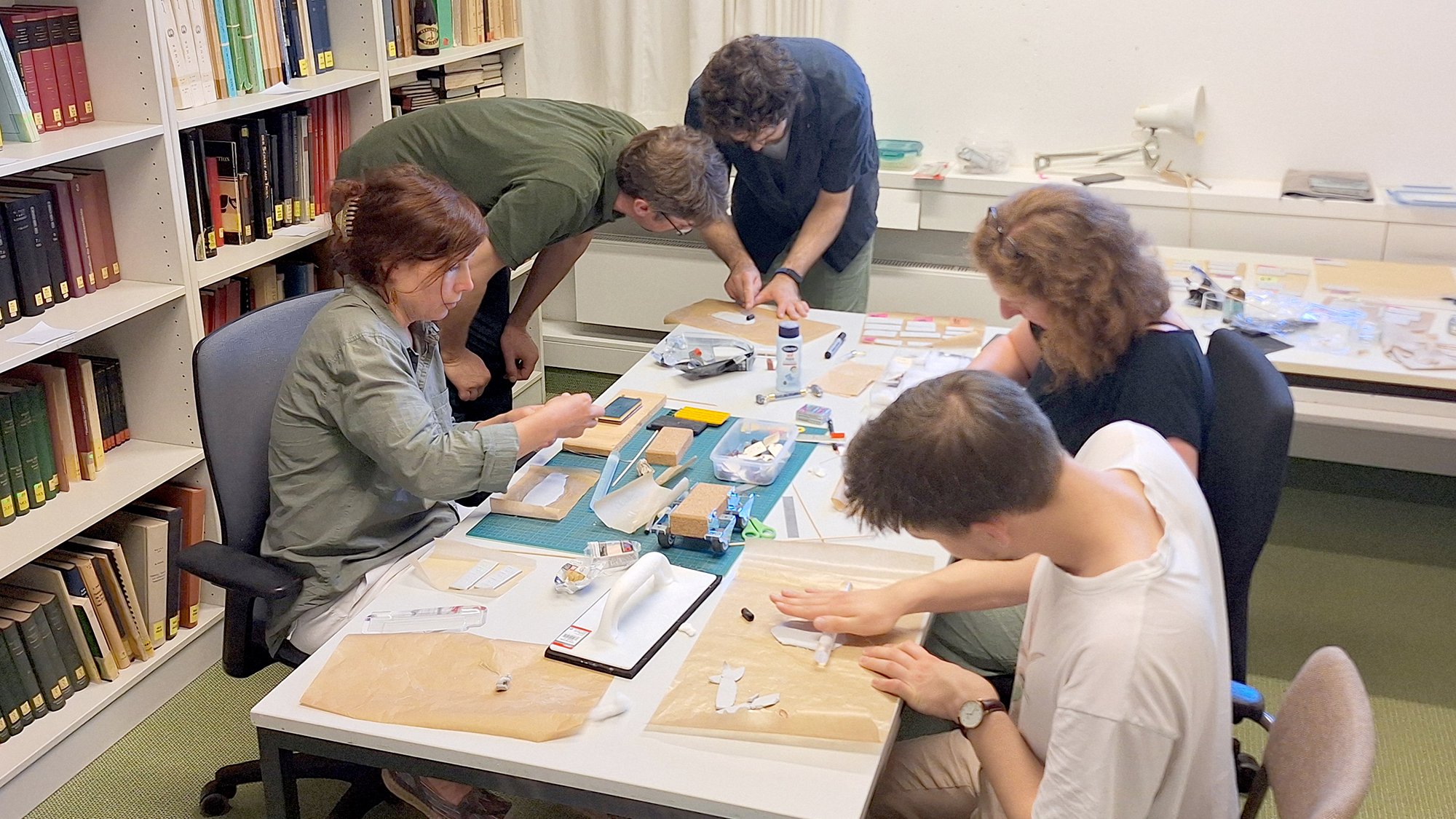
On August 13, the KIŠIB team joined colleagues at the Free University of Berlin to explore ancient Mesopotamian cylinder seals in a very hands-on way: by rolling them out on modelling clay and creating a new series of impressions.
Rolling Seals, Ancient Practice Revisited
It was a quiet but focused afternoon at the Institute of Ancient Near Eastern Archaeology of the Free University of Berlin. Around a table, scholars from Berlin and Munich leaned over tiny stone cylinders, pressing them carefully into soft Fimo. As the seals rolled across the surface, intricate images came to life—rows of worshippers, divine symbols, and fantastical creatures. For a brief moment, we shared the perspective of the Mesopotamian people, who once used these objects to seal documents and mark possessions.
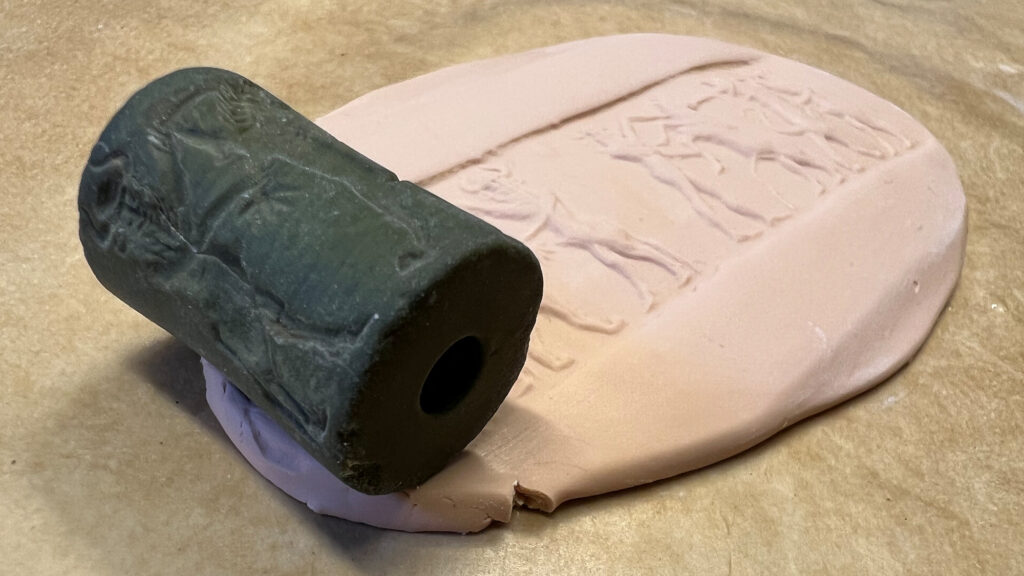
The institute’s collection consists of 161 original cylinder seals, dating from the 4th to the 1st millennium BCE. They come from Iraq, Syria, and Turkey and were acquired in 1967 from the private collection of Erwin Oppenländer. Since then, they have been used in teaching, introducing generations of students to the art and practice of sealing.
A Small Collection of Impressions, for Research and Teaching
The workshop did more than revive an ancient practice. It created a small collection of new impressions, now available for both teaching and research. For the KIŠIB project, these impressions are an important step toward researching seal iconography and inscriptions while sparing the originals from repeated handling.
The Oppenländer collection itself was first published by Ursula Moortgat-Correns in 1968 (Baghdader Mitteilungen 4, 233–97). By combining this catalogue with the new material, and with digital documentation to follow, we are laying the groundwork for a richer resource that connects past scholarship with present-day research.
What began as a quiet afternoon in Berlin has thus become an exciting encounter with one of the most captivating object types of ancient West Asia: the cylinder seal.